Author name: aachiyasin93@gmail.com

Effective Content Strategy
Uncategorized

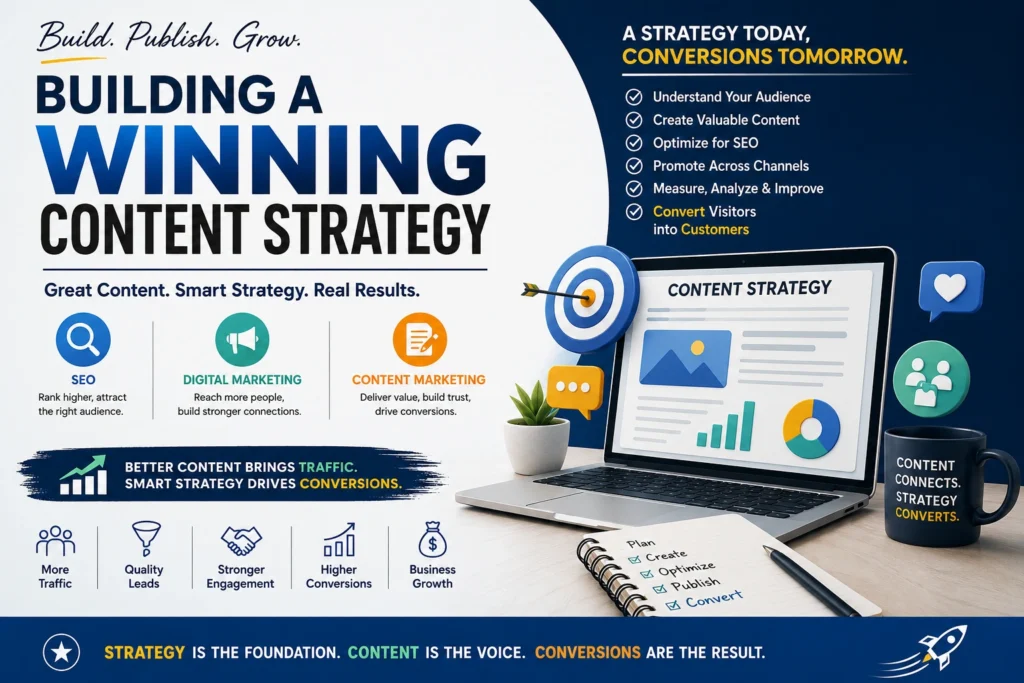
Building a Winning Content Strategy

Effective Content Strategy Introduction: Why Every Business Needs a Winning Content Strategy In today’s competitive digital landscape, publishing random content is no longer enough to attract and retain customers. Businesses must develop a structured content strategy that aligns with their goals, meets customer expectations, and supports long-term growth. A well-planned content strategy helps brands communicate effectively, build authority, and create meaningful relationships with their audience. Moreover, a successful strategy connects every piece of content with measurable business objectives. Instead of creating content without direction, organizations can use SEO, Digital Marketing, and Content Marketing to increase visibility, attract qualified traffic, and improve website conversions. Therefore, a winning content strategy becomes a valuable asset that delivers sustainable results over time. Section 1: Understanding the Foundation of a Winning Content Strategy Every successful content strategy begins with a clear purpose. Before creating blog posts, videos, social media updates, or email campaigns, businesses must define what they want to achieve. Objectives may include increasing brand awareness, generating leads, improving customer retention, or driving website conversions. Furthermore, organizations should ensure that their content aligns with overall business goals. When every article, infographic, or campaign serves a strategic purpose, marketing efforts become more effective. Consequently, businesses maximize their return on investment while building stronger relationships with their audience. Section 2: Know Your Audience Before Creating Content An effective content strategy starts with understanding the target audience. Businesses should research customer demographics, interests, online behavior, and pain points. This information enables marketers to create personalized content that solves real problems and answers common questions. Additionally, creating buyer personas helps marketers produce relevant content for different stages of the customer journey. As a result, readers feel understood, engage more frequently, and develop greater trust in the brand. Ultimately, audience-focused content significantly increases website conversions. Section 3: Set SMART Goals That Drive Business Growth Successful content strategies rely on clearly defined goals. Instead of aiming for vague outcomes like “increase traffic,” marketers should establish SMART goals that are Specific, Measurable, Achievable, Relevant, and Time-bound. For example, a business may aim to increase organic website traffic by 40% within six months or generate 300 qualified leads through content marketing campaigns. Because measurable objectives provide direction, businesses can evaluate performance accurately and continuously improve their marketing efforts. Section 4: Create High-Quality Content That Delivers Value Quality always outweighs quantity in content creation. Instead of publishing frequent low-value articles, businesses should focus on creating comprehensive, informative, and engaging content that genuinely helps readers. Furthermore, valuable content establishes credibility and positions a company as an industry authority. Whether publishing educational blogs, case studies, videos, or downloadable resources, businesses should prioritize solving customer problems. Consequently, audiences return for more information and are more likely to become loyal customers. Section 5: Master SEO to Increase Organic Visibility Search Engine Optimization (SEO) forms the backbone of every successful content strategy. Without proper optimization, even outstanding content may struggle to reach its intended audience. Therefore, businesses should conduct keyword research and naturally integrate relevant keywords such as SEO, Digital Marketing, Content Marketing, and website conversions throughout their content. Additionally, marketers should optimize titles, meta descriptions, headings, internal links, image alt text, and page speed. Search engines reward websites that provide valuable user experiences. As a result, optimized content ranks higher, attracts qualified visitors, and generates sustainable organic traffic. Section 6: Integrate Content Marketing with Digital Marketing Content should never exist in isolation. Instead, businesses should integrate their Content Marketing efforts with broader Digital Marketing strategies. Social media platforms, email marketing, paid advertising, influencer partnerships, and search engine marketing can significantly amplify content reach. Moreover, cross-channel promotion ensures that valuable content reaches audiences wherever they spend their time online. This integrated approach improves brand consistency, increases audience engagement, and creates multiple opportunities for website conversions. Section 7: Build a Consistent Content Calendar Consistency plays a vital role in long-term marketing success. A well-organized content calendar enables businesses to publish regularly while maintaining quality and relevance. Planning content in advance also reduces last-minute stress and improves team collaboration. In addition, a content calendar helps marketers balance different content formats, seasonal campaigns, industry trends, and promotional activities. Consequently, audiences receive fresh, valuable content consistently, which strengthens trust and encourages repeat visits. Section 8: Measure Performance Using Data and Analytics Content strategy should always be driven by data rather than assumptions. Businesses must monitor key performance indicators such as website traffic, bounce rate, keyword rankings, engagement metrics, lead generation, and website conversions. Furthermore, analytics platforms provide valuable insights into audience behavior. Marketers can identify high-performing content, discover improvement opportunities, and refine future campaigns accordingly. Therefore, continuous measurement ensures ongoing optimization and greater marketing success. Section 9: Optimize Content for Higher Website Conversions Driving traffic is only one part of the equation. Businesses must also convert visitors into subscribers, leads, and customers. Therefore, every piece of content should include compelling calls to action that encourage readers to take the next step. Additionally, marketers should optimize landing pages, improve website navigation, simplify forms, and provide valuable lead magnets. These improvements reduce friction throughout the customer journey and significantly increase website conversions while enhancing the overall user experience. Section 10: Repurpose Content for Maximum Reach Creating new content requires time and resources. Fortunately, businesses can maximize their investment by repurposing existing content into multiple formats. A detailed blog post can become social media posts, videos, podcasts, infographics, email newsletters, or downloadable guides. Furthermore, repurposing allows businesses to reach different audience segments that prefer different content formats. This strategy increases visibility, reinforces messaging, and extends the lifespan of valuable content while improving overall marketing efficiency. Section 11: Stay Flexible and Continuously Improve Digital trends continue to evolve rapidly, making adaptability essential. Businesses should regularly review their content strategy, monitor competitor performance, analyze search trends, and gather customer feedback to remain competitive. Moreover, continuous experimentation with new content formats, technologies, and marketing channels helps organizations discover innovative opportunities. Businesses that embrace improvement consistently outperform competitors and achieve sustainable long-term growth. Best Practices for Building a

Blog
Uncategorized

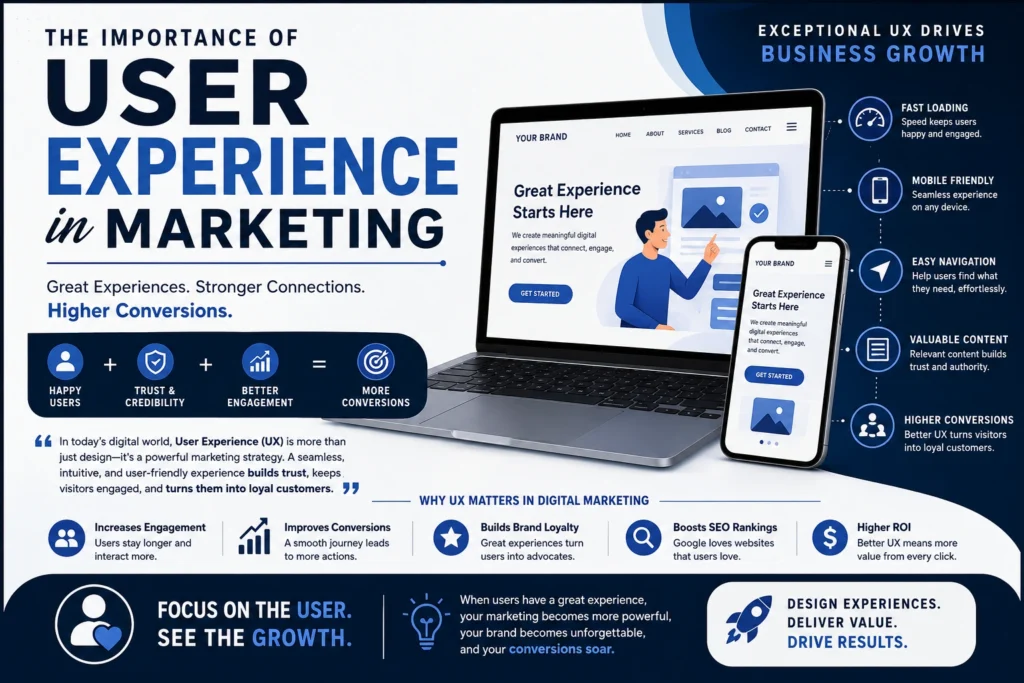
The Importance of User Experience in Marketing

User Experience Marketing Introduction: Why User Experience Matters More Than Ever In today’s competitive digital landscape, businesses must do more than simply attract visitors to their websites. They must also create meaningful, engaging, and seamless experiences that encourage users to stay, interact, and take action. This is where User Experience (UX) becomes one of the most valuable components of Digital Marketing. A well-designed user experience transforms casual visitors into loyal customers while improving trust, satisfaction, and overall business performance. Moreover, modern consumers have high expectations when interacting with websites, mobile applications, and digital platforms. They expect speed, simplicity, and convenience at every stage of their journey. Consequently, companies that prioritize user experience consistently achieve higher engagement, stronger customer relationships, and improved Website Conversions. Therefore, investing in UX is no longer optional—it is a strategic necessity. 1. Understanding User Experience in Digital Marketing User Experience refers to the overall impression users have while interacting with a website, application, or digital platform. It includes website design, navigation, loading speed, accessibility, readability, mobile responsiveness, and ease of completing tasks. Every interaction influences how users perceive a brand. Furthermore, Digital Marketing extends beyond advertisements and promotional campaigns. It focuses on delivering valuable experiences that guide potential customers toward meaningful actions. When marketing strategies align with excellent UX, businesses create stronger emotional connections with their audiences, ultimately leading to better engagement and increased customer loyalty. 2. The Connection Between UX and Customer Satisfaction Customer satisfaction depends heavily on how easily users can accomplish their goals. Whether visitors want to purchase a product, read information, or contact customer support, they expect the process to be quick and intuitive. Therefore, a positive user experience directly contributes to customer happiness. Additionally, satisfied customers are more likely to recommend a brand to others, leave positive reviews, and become repeat buyers. As a result, businesses benefit from improved brand reputation and stronger long-term relationships. In Digital Marketing, these positive experiences naturally support customer retention while encouraging sustainable business growth. 3. Website Speed: The Foundation of Better Website Conversions Website speed plays a critical role in determining user satisfaction. Slow-loading pages frustrate visitors and often cause them to abandon the website before engaging with its content. Consequently, businesses lose valuable opportunities to generate leads and sales. On the other hand, fast-loading websites improve user engagement and increase Website Conversions. Search engines also reward faster websites with better rankings, making speed an essential factor in both SEO and Digital Marketing. Therefore, optimizing page performance should always remain a priority for marketers and developers alike. 4. Mobile-Friendly Design Enhances User Engagement With the majority of internet users browsing through smartphones and tablets, mobile responsiveness has become essential. Users expect websites to function flawlessly across every screen size without compromising usability or visual quality. Furthermore, responsive design ensures that navigation, images, buttons, and forms remain easy to use regardless of the device. This consistency creates a positive user experience that encourages visitors to stay longer and complete desired actions. Consequently, businesses experience improved engagement and higher Website Conversions across multiple platforms. 5. Simple Navigation Builds Trust and Confidence An organized website structure helps users find information quickly without confusion. Clear menus, logical page layouts, and intuitive navigation reduce frustration while increasing user confidence. As a result, visitors spend more time exploring the website. Moreover, simple navigation reflects professionalism and reliability. Users naturally trust websites that are easy to understand and operate. Within Digital Marketing, trust plays a significant role in influencing purchasing decisions. Therefore, well-planned navigation contributes directly to stronger customer relationships and increased conversions. 6. Quality Content Supports an Outstanding User Experience Content remains one of the most influential elements of user experience. Informative, relevant, and well-structured content helps visitors solve problems, answer questions, and make informed decisions. Consequently, valuable content keeps users engaged for longer periods. Additionally, combining quality content with effective UX creates a powerful Digital Marketing strategy. Clear headings, concise paragraphs, engaging visuals, and readable typography make information easier to consume. As a result, users enjoy their browsing experience while businesses strengthen credibility and improve Website Conversions. 7. Personalization Creates Meaningful Customer Experiences Modern consumers appreciate personalized experiences that match their interests and preferences. Businesses can achieve this by recommending relevant products, displaying customized content, and delivering targeted marketing messages. Furthermore, personalization makes customers feel understood and valued. This emotional connection increases engagement while encouraging repeat visits and purchases. Consequently, personalized experiences strengthen customer loyalty and maximize the effectiveness of Digital Marketing campaigns. 8. User Experience Improves SEO Performance Search engines prioritize websites that deliver positive user experiences. Factors such as page speed, mobile responsiveness, user engagement, and low bounce rates contribute significantly to search engine rankings. Therefore, UX and SEO work together rather than functioning as separate disciplines. Moreover, better search rankings generate increased organic traffic, allowing businesses to reach wider audiences without relying solely on paid advertising. When combined with effective Digital Marketing strategies, excellent UX creates a sustainable foundation for continuous online growth and stronger Website Conversions. 9. Measuring UX Success Through Analytics Improving user experience requires continuous evaluation and optimization. Businesses should regularly monitor important metrics such as bounce rate, session duration, click-through rate, conversion rate, and customer feedback. These insights reveal how users interact with digital platforms. Additionally, analytics tools help marketers identify areas requiring improvement. By making data-driven decisions, organizations can refine website design, optimize customer journeys, and remove barriers that reduce engagement. Consequently, continuous UX improvements lead to better Website Conversions and more successful Digital Marketing campaigns. 10. The Future of User Experience in MarketingZ Technology continues to reshape how customers interact with businesses. Artificial intelligence, voice search, augmented reality, and predictive personalization are creating more immersive and convenient digital experiences. Therefore, companies must continuously adapt their user experience strategies to remain competitive. Furthermore, customer expectations will continue to rise as digital innovation accelerates. Businesses that prioritize accessibility, speed, personalization, and usability will build stronger relationships while maintaining long-term success. Ultimately, the future of Digital Marketing belongs to organizations that place user

Content Marketing Strategy
Uncategorized

Building Customer Relationships Through Content

Content Marketing Strategy 1. Introduction: Why Content Is the Foundation of Customer Relationships Content has become one of the most valuable assets in modern business. Instead of focusing only on selling products or services, successful brands now prioritize building meaningful relationships with their audiences. Through valuable, informative, and engaging content, businesses can earn trust, establish credibility, and create lasting customer loyalty. As a result, companies that invest in Content Marketing often enjoy stronger customer retention and higher conversion rates. Moreover, today’s consumers expect brands to provide value before asking for a purchase. They actively search for helpful information, practical solutions, and authentic experiences. Therefore, businesses that consistently publish high-quality content position themselves as trusted industry leaders. In the world of Digital Marketing, content is no longer optional—it is the driving force behind sustainable business growth. 2. Understanding Customer Relationships in the Digital Age Customer relationships have evolved significantly over the past decade. Previously, communication between businesses and customers was mostly one-way. However, digital platforms have transformed this dynamic by enabling real-time conversations, instant feedback, and continuous engagement. Consequently, brands must focus on creating valuable interactions rather than simply promoting products. Furthermore, customers appreciate businesses that understand their needs and respond with relevant information. Personalized blog posts, educational videos, informative emails, and engaging social media content help strengthen these relationships. Through effective Content Marketing, businesses can connect with customers on a deeper level while supporting every stage of the buying journey. 3. Creating Valuable Content That Solves Real Problems The most successful content addresses customer questions and challenges. Instead of creating promotional material alone, businesses should focus on educating, informing, and inspiring their audience. When customers consistently find helpful solutions through your content, they naturally begin to trust your brand. Additionally, valuable content demonstrates expertise without appearing overly sales-driven. Step-by-step guides, detailed tutorials, case studies, and frequently asked questions provide practical value while showcasing industry knowledge. As part of a strong Digital Marketing strategy, problem-solving content encourages repeat visits and strengthens long-term customer relationships. 4. Building Trust Through Consistency and Authenticity Trust develops over time through consistent communication and genuine interactions. Publishing high-quality content regularly shows customers that your business remains active, reliable, and committed to providing value. Consequently, consistency helps establish a recognizable brand identity. Equally important, authenticity strengthens emotional connections. Customers can easily recognize exaggerated claims or misleading information. Therefore, businesses should communicate honestly, acknowledge challenges, and share real experiences whenever possible. Authentic storytelling enhances Content Marketing efforts by making brands more relatable and trustworthy. 5. Personalizing Content for Better Customer Engagement Every customer has unique interests, goals, and preferences. Therefore, personalized content significantly improves engagement by delivering information that matches specific audience needs. Businesses can use customer data, behavior patterns, and market research to create highly relevant content experiences. Moreover, personalized emails, product recommendations, and customized blog articles demonstrate that a brand truly understands its audience. This customer-focused approach increases satisfaction while strengthening relationships. Within Digital Marketing, personalization has become a powerful strategy for improving both engagement and customer loyalty. 6. Using Storytelling to Create Emotional Connections Stories capture attention more effectively than facts alone. They allow businesses to communicate values, experiences, and customer success in a memorable way. As a result, storytelling creates emotional connections that encourage customers to remember and trust a brand. Furthermore, authentic customer stories, behind-the-scenes insights, and founder experiences humanize a business. Instead of appearing as a distant company, the brand becomes relatable and approachable. Effective Content Marketing uses storytelling not only to entertain but also to educate and inspire audiences. 7. Leveraging Multiple Content Channels for Stronger Relationships Modern customers consume content across multiple platforms. Therefore, businesses should distribute valuable content through blogs, social media, email newsletters, podcasts, videos, and webinars. A multi-channel approach ensures that customers can engage with your brand wherever they spend their time online. In addition, each platform serves a different purpose. Blog articles improve search visibility, videos simplify complex topics, and social media encourages conversations. Together, these channels strengthen overall Digital Marketing performance while creating consistent customer experiences across every touchpoint. 8. Encouraging Two-Way Communication Building customer relationships requires more than publishing content. Businesses must also encourage conversations by responding to comments, answering questions, and inviting customer feedback. This interactive approach transforms passive readers into active community members. Likewise, surveys, polls, live sessions, and discussion forums provide opportunities for meaningful engagement. When customers feel heard and appreciated, they become more loyal to the brand. Consequently, Content Marketing becomes a valuable tool for building communities instead of simply generating website traffic. 9. Measuring Content Performance and Customer Satisfaction Creating content is only the beginning. Businesses must continuously analyze performance to understand what resonates with their audience. Metrics such as website traffic, engagement rates, time on page, conversion rates, and customer feedback reveal valuable insights for future improvements. Furthermore, customer satisfaction surveys and behavioral analytics help identify opportunities to strengthen relationships. By monitoring performance regularly, businesses can refine their Digital Marketing strategy and deliver even greater value through their content. Data-driven decisions ensure continuous improvement and long-term success. 10. Overcoming Common Content Marketing Challenges Although content offers tremendous opportunities, businesses often face several challenges. Limited resources, inconsistent publishing schedules, and changing customer expectations can affect content performance. Nevertheless, these obstacles can be overcome with proper planning and a clear strategy. Additionally, maintaining quality should always take priority over producing large quantities of content. A well-researched article that genuinely helps readers delivers far greater value than multiple low-quality posts. Therefore, businesses should invest in continuous learning, audience research, and content optimization to maximize the impact of their Content Marketing efforts. 11. The Future of Customer Relationships Through Content Technology continues to reshape how businesses connect with customers. Artificial intelligence, predictive analytics, voice search, and personalized automation are creating new opportunities for delivering highly relevant content experiences. Consequently, businesses that embrace innovation will remain competitive in the evolving digital landscape. However, regardless of technological advancements, the core principle remains unchanged: customers value authenticity, trust, and meaningful communication. Successful Digital Marketing

Scroll to Top